Growing your hair out in Charlotte does not mean skipping the barber. It means changing what the appointment is for. Instead of taking length off everywhere, a maintenance cut cleans up the ends, removes splits before they travel, and keeps the shape from turning into a triangle at the bottom and a tangle at the top.
Split ends do not heal. Once a strand splits, the split can climb higher the longer it stays, especially with heat, tight ponytails, and rough brushing. The checklist below is the order a barber works through at Bennett's Barbershop when someone wants to keep the length and lose the damage.
Why long hair breaks even when it looks healthy
The oldest hair on your head sits at the ends. Hair grows about half an inch a month on average, so hair that reaches your shoulders has been through two years or more of sun, washing, friction from collars and seat belts, and Piedmont summer humidity. The cuticle, the outer layer that keeps a strand smooth, wears thin over that time. When it lifts or cracks, strands catch on each other, feel rough, and snap instead of stretching.
That wear shows up first at the very tips. A strand that looks fine in the middle can be frayed in the last half inch. Cutting that small section early is the whole point of a maintenance trim. Waiting until the damage is obvious usually means giving up more length at once.
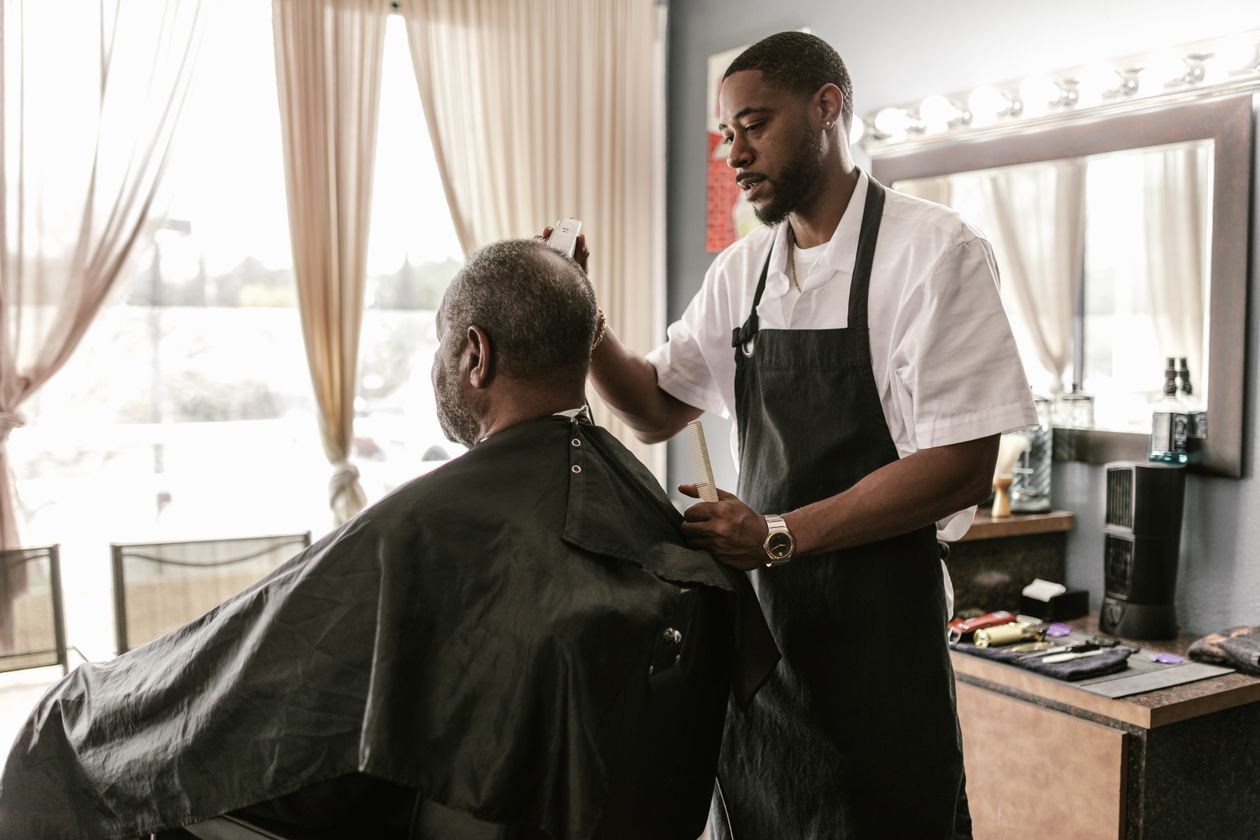
The maintenance checklist, in order
Work down this list every few weeks in good light. Any line that fails is a reason to book a trim rather than push the appointment out another month.
Long-hair check: pass or trim
- Ends feel rough when dry: Pass if the last inch feels like the rest of the strand. Fail if it feels straw-like, crunchy, or lighter in color.
- Visible splits: Pass if you cannot find forked tips holding a section up to the light. Fail if splits, white dots, or bent tips show up in several places.
- Tangles start at the bottom: Pass if a brush moves through with mild resistance. Fail if knots form in the same spot every day.
- Shape still sits right: Pass if the sides and back grow out evenly. Fail if the bottom looks heavy and the top looks flat.
- Ponytail or bun marks: Pass if hair falls normally after you take it down. Fail if you see a crease, thinning at the tie point, or short broken pieces around the hairline.
- Neck and shoulders: Pass if the ends rest cleanly. Fail if they rub, curl outward from friction, or catch on shirt collars all day.
Tying it back without doing the damage yourself
Most breakage on long hair is mechanical, not chemical. A tight elastic pulled to the same spot daily creates a weak ring around every strand it touches. Switch to a soft fabric tie or a spiral tie, move the position up and down, and never tie hair up while it is wet and at its most fragile. Take it down before sleep when you can, or use a loose braid.
Brushing matters too. Start at the ends and work up in short sections instead of dragging a brush from the scalp through a knot. Wet hair stretches more and snaps sooner, so detangle gently with fingers or a wide-tooth comb after a shower, not with hard strokes.
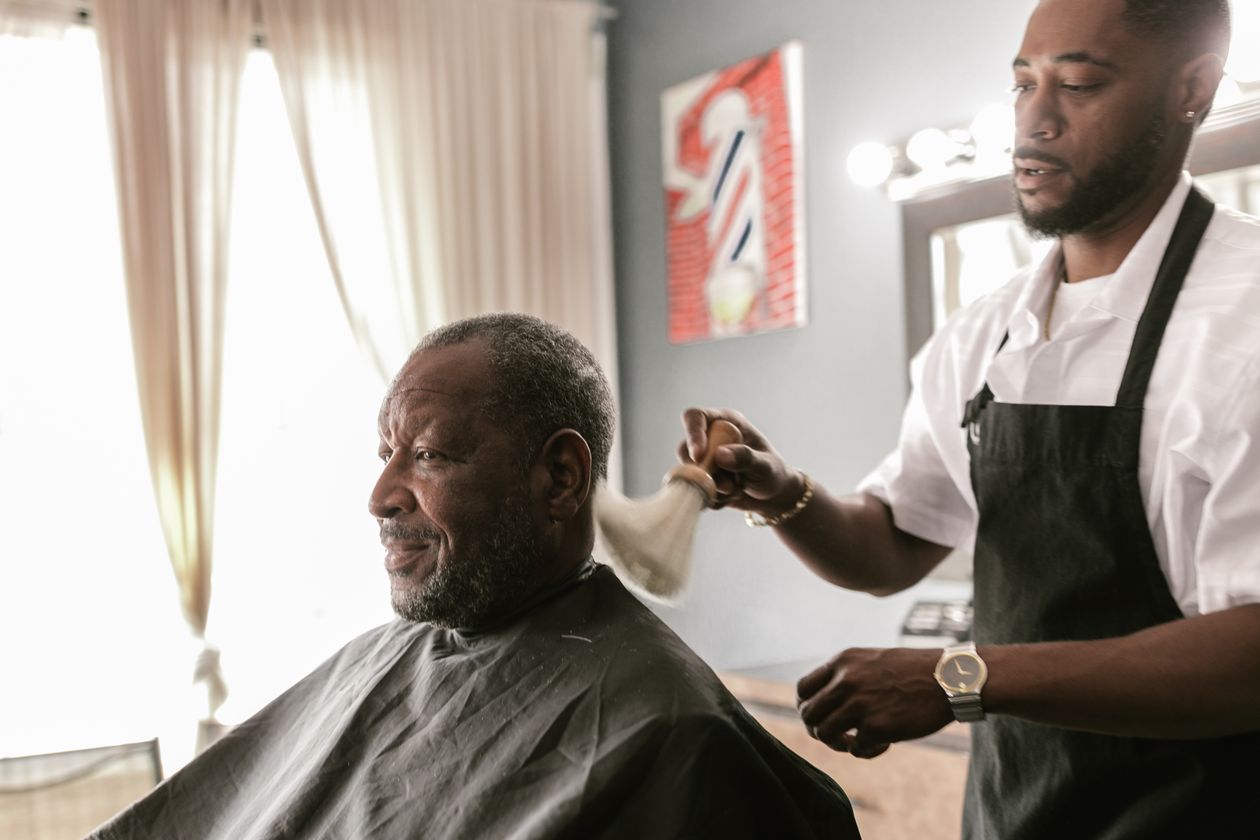
How often a maintenance trim actually needs to happen
For most men growing or keeping long hair, a small trim every eight to twelve weeks holds the ends together without slowing progress in any way you would notice. Hair that is heat-styled often, or worn in a tight bun for work, may need attention closer to six to eight weeks. The amount removed at a maintenance visit is small, often a quarter to half an inch, just past the damaged section.
Tell the barber plainly that length is the priority and ask to see what will come off before the cut starts. That one sentence prevents the most common long-hair complaint, which is leaving with a short cut you did not ask for.
Common questions
Do split-end repair products fix splits?
No. Conditioners and oils can smooth a split so it looks and feels better for a day, but the strand is still split. Only cutting past the split removes it.
Will trimming make my hair grow faster?
No. Growth happens at the scalp. Trimming helps because ends stop breaking off, so the length you grow actually stays.
Should I cut long hair wet or dry?
Both work. Dry cutting shows the barber exactly how the hair falls and where it curls, which helps on wavy or uneven growth. Mention it when you book if you have a preference.
Photos in this guide are representative stock images.
← All guides from Bennett's Barbershop← Back to Bennett's Barbershop